The Catholic Church celebrates two beautiful Marian observances closely connected to the mission of the Blessed Virgin Mary in the life of the Church: the Feast of Our Lady, Help of Christians on May 24, and the Memorial of Mary, Mother of the Church, celebrated on the Monday after Pentecost.
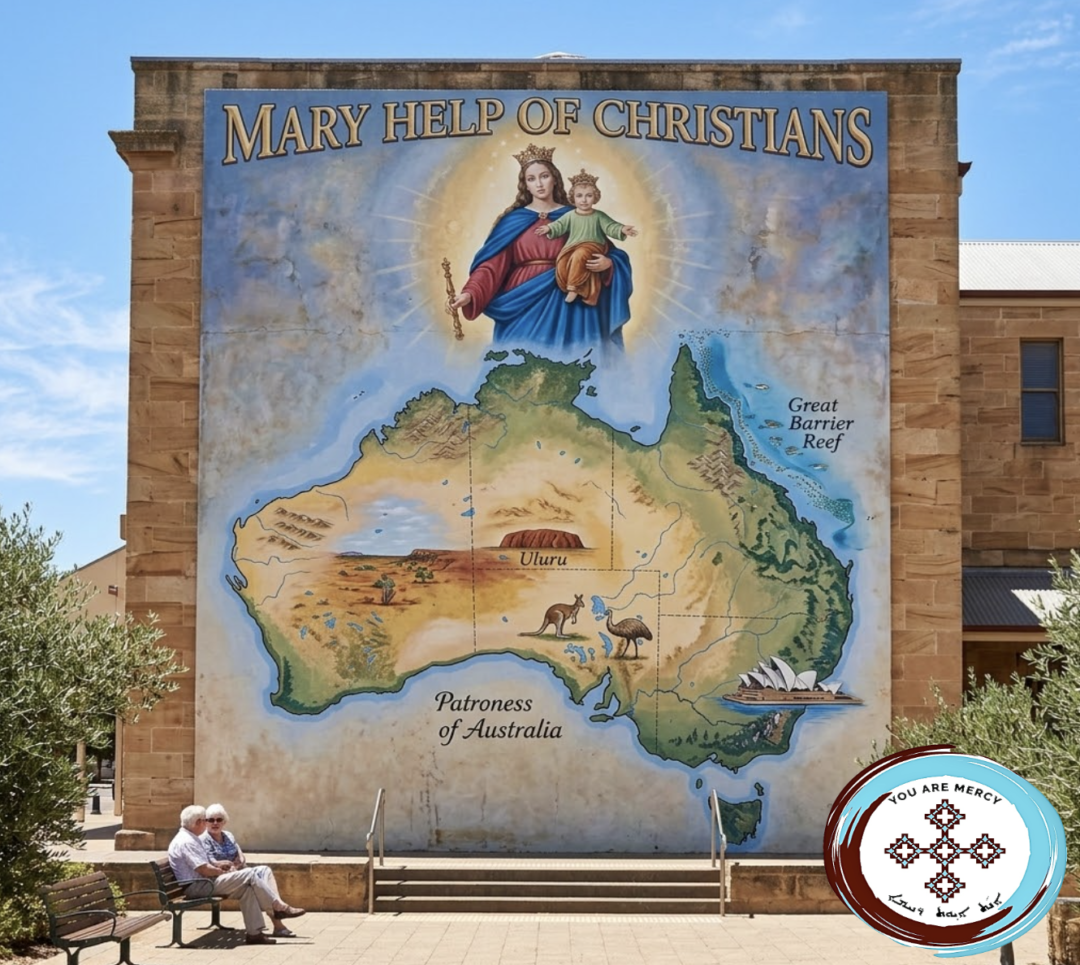
Our Lady under the title “Help of Christians” has long been honoured by Catholics throughout the world, and especially in Australia, where she is one of the principal spiritual patrons of the nation together with Saint Mary of the Cross MacKillop.
The title “Help of Christians” (Auxilium Christianorum) is very ancient. It was already used by Saint John Chrysostom, who died in 407 AD, in one of his homilies praising the protection and intercession of the Blessed Virgin Mary. Scholars also note that this title appears in spirit within the ancient Marian prayer Sub Tuum Praesidium (“Under your protection we seek refuge, Holy Mother of God”), which dates back to the third century and is considered the oldest known prayer addressed directly to Mary.
Throughout Christian history, Catholics have invoked Mary as the protector and defender of the faithful during times of danger, persecution, and war. One of the most significant moments connected with this title occurred after the Battle of Lepanto on October 7, 1571, when a Christian fleet defeated the advancing Ottoman Turkish forces. Pope Pius V had urged Christians throughout Europe to pray the Rosary and seek the intercession of the Blessed Virgin Mary for victory and protection. In thanksgiving after the victory, the Pope added the invocation “Help of Christians” to the Litany of Loreto, recognising Mary’s maternal intercession in preserving Christian Europe.
The devotion grew even stronger during the pontificate of Pope Pius VII. After Napoleon Bonaparte imprisoned the Pope from 1809 until 1814 and attempted to weaken the authority of the Church, Catholics throughout the world prayed fervently for the Pope’s release. When Pius VII finally returned to Rome on May 24, 1814, he attributed his freedom to the intercession of Our Lady Help of Christians. In gratitude, he established the universal feast of Our Lady Help of Christians to be celebrated annually on May 24.
In Australia, devotion to Our Lady Help of Christians holds a unique and cherished place. At the First Provincial Synod of Sydney in 1844, the bishops of Australia chose Mary under this title as Patroness of Australia. The choice was especially meaningful because, at that time, Catholic priests were scarce in the young colony, and Catholics often relied upon the protection and guidance of the Blessed Virgin to preserve and strengthen the faith in the new land.
Most images of Our Lady Help of Christians portray the Blessed Virgin standing upon the globe of the world, holding the Child Jesus in one arm and a royal sceptre in the other, symbolising her queenship and maternal care over all nations. Both Mother and Child are often shown crowned. In Australia, some depictions even include the map of Australia upon the globe to signify the nation’s special relationship with Mary under this title.
The devotion is also deeply loved among Chinese Catholics, especially at the famous Shrine of Our Lady of Sheshan near Shanghai, where Mary is venerated as Our Lady Help of Christians.
Australian Catholic culture has also been shaped by this devotion through sacred music and prayer. The Sydney-born poet James McAuley wrote the hymn Help of Christians Guard this Land, which was published in the 1961 Living Parish Hymn Book and later set to music by Richard Connolly. The hymn became familiar to generations of Catholic school students in the 1960s and 1970s and continues to be sung at solemn liturgies, especially at St Mary’s Cathedral and during celebrations connected with Australia Day.
Closely connected to Mary’s role in the life of the Church is the more recent memorial of Mary, Mother of the Church. Although Christians had long reflected upon Mary as the spiritual mother of all believers, the title was solemnly proclaimed by Pope Paul VI during the Second Vatican Council on November 21, 1964. He declared Mary to be “Mother of the Church,” meaning mother of all Christ’s faithful and mother of the Church itself.
In 2018, Pope Francis officially added the Memorial of the Blessed Virgin Mary, Mother of the Church to the Roman Calendar, to be celebrated each year on the Monday after Pentecost. The placement of the feast highlights the profound connection between Mary, the coming of the Holy Spirit, and the birth of the Church at Pentecost. Just as Mary was present with the Apostles in prayer in the Upper Room (Acts 1:14), she continues to accompany the Church as a loving spiritual mother.
For Catholics, these two Marian celebrations beautifully express Mary’s maternal mission: she is both the powerful Help of Christians in times of trial and the tender Mother of the Church who continually leads believers closer to her Son, Jesus Christ.


No Comments